| Guest Profile |

Shao Chunli
Peking University Third Hospital |
Introduction:
He holds a Doctor of Medicine (MD) and is a Chief Physician. He is currently Deputy Director of the Smart ECG Center at Peking University Third Hospital. He has long been dedicated to the clinical diagnosis, treatment, and research of coronary artery disease, hypertrophic cardiomyopathy, and metabolic diseases. He serves as a member of the Cardiovascular Clinical Research Group of the Chinese Medical Association's Cardiovascular Branch, a member of the Pharmacogenomics Committee of the Chinese Pharmacological Society, a standing member of the Medical Device Science and Technology Innovation Committee of the China Technology Market Association, and a young standing member of the Lipids and Lipoproteins Committee of the Chinese Society of Biochemistry and Molecular Biology. He serves as the principal investigator for key projects under the National Key R&D Program of the Ministry of Science and Technology and the Beijing Natural Science Foundation. He has presided over and participated in over 20 national, provincial, and ministerial research projects, and has led over 20 internationally influential clinical studies and Phase III trials of innovative drugs. He has published over 70 papers and co-edited seven professional books. He has received numerous honors, including the First Prize of the Huaxia Medical Science and Technology Award, the Special Prize of the Beijing Medical Science and Technology Award, and the Second Prize of the Chinese Medical Science and Technology Award. He was named "Top Ten Most Influential Young Cardiologists in China in 2018" and "Fourth Young and Middle-Aged Cardiology Elite Public Welfare Star."
Report Title: AI-Enabled Wireless Sensing: Reshaping the Paradigm for Cardiovascular Health Monitoring and Improving Precision Management
Report Introduction:
Cardiovascular disease is a major threat to global health and the leading cause of death in my country. Traditional monitoring methods rely on contact sensors, which suffer from intermittent measurement and poor comfort. The combination of millimeter-wave radar and artificial intelligence (AI) has revolutionized cardiovascular health monitoring. This technology uses radar to capture submillimeter displacement signals from the human chest cavity and, combined with AI noise reduction and feature extraction, enables non-contact, continuous monitoring. Its core advantages include: 1) contactless continuous monitoring, transcending physical contact limitations; 2) multi-parameter fusion, improving the reliability of blood pressure and arrhythmia diagnosis; and 3) proactive early warning, building a personalized health baseline based on long-term data to provide early risk warning. This technology expands monitoring beyond the hospital setting into everyday life, providing continuous data support for hypertension management, postoperative rehabilitation, and other areas, ushering in a new era of precision cardiovascular health management. In the future, multimodal fusion will further enhance its universality and accuracy. |

Song Hong
Beijing Institute of Technology |
Introduction:
Professor at the School of Computer Science, Beijing Institute of Technology. Member of the Higher Education Teaching Steering Committee of the Ministry of Education, Standing Committee Member of the Intelligent Services Professional Committee of the Chinese Artificial Intelligence Society, Member of the Virtual Reality Professional Committee of the Chinese Image and Graphics Society, and Member of the Digital Medicine Branch of the China Computer Federation. He has long been engaged in research in artificial intelligence, surgical navigation, and medical image processing. He has led over ten projects, including joint key projects of the National Natural Science Foundation of China, general projects, national key R&D program projects, and major special projects on artificial intelligence. He has published over 90 SCI papers in prestigious journals such as IEEE TIP, IEEE TFS, and IEEE JBHI. He has participated in the development of one diagnostic and treatment standard, co-edited one monograph, applied for and been granted over 80 national invention patents, and presided over the development of three surgical navigation systems. His research has resulted in six national Class III and Class II medical device registration certificates, and his innovative applications have been implemented in over 200 hospitals and 16 companies. He has also won the First Prize of the China Institute of Electronics Science and Technology Progress Award, the First Prize of the Wu Wenjun Artificial Intelligence Science and Technology Progress Award, and the China Industry-University-Research Cooperation Innovation Award.
Report Title: Core Technologies and Applications of Augmented Reality Surgical Navigation
Report Introduction:
Minimally invasive surgery offers significant advantages, including minimal trauma, rapid patient recovery, and fewer postoperative complications. It has been widely used in the diagnosis and treatment of diseases such as oncology, head and neck surgery, and orthopedics. Surgical navigation provides a "smart eye" for minimally invasive surgery, significantly improving surgical precision, safety, and efficiency. This report focuses on core issues in surgical navigation, including preoperative intelligent planning, intraoperative intelligent perception, and intelligent target guidance. It will introduce the research team's progress in multimodal image intelligent analysis, including image segmentation modeling, multimodal image registration and fusion, and motion deformation perception and compensation. It will also highlight the core positioning and reconstruction components developed, the augmented reality surgical navigation system, and its clinical translational applications. |
Chen Yan
University of Science and Technology of China |
Introduction:
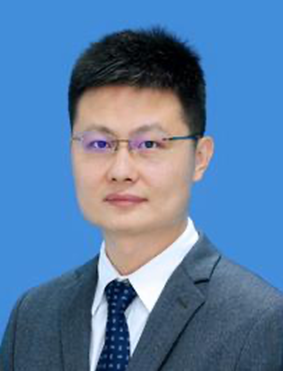
Professor and doctoral supervisor at the University of Science and Technology of China, Vice Dean of the School of Cyberspace Security, Director of the Ministry of Culture and Tourism's Key Laboratory of "Cyber Cultural Content Cognition and Detection," Distinguished Professor at Anhui Provincial Hospital, and a recipient of the National Innovative Talents Program. He primarily conducts research in electromagnetic sensing and multimodal sensing. He has published two books (Cambridge University Press, Springer) and over 200 academic papers, including over 100 in Nature and IEEE journals. His research results have been reported by dozens of mainstream media outlets, including IEEE Spectrum, Communications of the ACM, China National Radio, Guangming Online, China News Service, Daily News Era, The Star, and AsiaOne. He has won five Best (Student) Paper Awards at international conferences. He serves on the editorial boards of international journals such as IEEE SPL, IEEE Sensors Journal, IEEE TNSE, and IEEE TSIPN. He is also an APSIPA Distinguished Lecturer (2020-2021) and a member of the IEEE Sensor Array and Multichannel Research Committee. He has been recognized as one of the top 2% of scientists worldwide for six consecutive years.
Report Title: Millimeter-Wave Radar Heart Disease Monitoring Technology
Report Introduction:
This report will introduce the latest advances in millimeter-wave radar in cardiovascular disease monitoring, from single-point millimeter-wave radar monitoring to three-dimensional surface monitoring, and from cardiac mechanical vibration to physiological electrical activity mapping. It will focus on suppressing respiratory spectrum leakage and the challenges of achieving contactless atrial fibrillation detection in large populations. |

Zhang Fusang
Chinese Academy of Sciences |
Introduction:
Research Fellow, National Excellent Young Scholar, Doctoral Supervisor at the Institute of Software, Chinese Academy of Sciences, Beijing Science and Technology Rising Star, ACM SIGMOBILE China Rising Star Award, Wu Wenjun Artificial Intelligence Outstanding Young Scientist Award, Microsoft Star Scholar, and AIoT Young Scientist. His main research interests are mobile and ubiquitous computing, and intelligent sensing. He has published over 60 papers in top international journals and conferences, including IEEE JSAC, IEEE TMC, ACM MobiCom, USENIX NSDI, ACM UbiComp, and ACM CoNEXT. The research findings were nominated for the Best Paper Award at MobiCom, a leading mobile computing and networking conference, as well as the Best Community Paper Award at MobiCom, the Outstanding Paper Award at UbiComp, the Best Paper Award at CCF TPCI, and the Best Paper Award at the HHME PCC conference. The research findings were featured in numerous media outlets, including China Science Daily and the renowned science and technology news outlet New Scientist.
Report Title: Human Vital Sign Sensing Based on Commercial UWB Signals
Report Introduction:
In recent years, ultra-wideband (UWB) technology, thanks to its high precision, low power consumption, and strong anti-interference capabilities, has been widely adopted in mobile devices such as smartphones, smartwatches, and smart tags. This has opened up new avenues for innovation in Internet of Things (IoT) applications, particularly in the field of health monitoring, where UWB technology demonstrates tremendous potential. Based on commercial UWB signals, we conducted in-depth modeling and analysis of the impact of the human body and environment on signal propagation characteristics, achieving non-contact, accurate sensing of the target's vital signs, such as breathing. This report will delve into the latest research advances in UWB health sensing technology, providing new insights for advancing its practical application in scenarios such as home-based elderly care and health monitoring. These research findings not only expand the application boundaries of UWB technology but also provide a technical path to surpass the adaptability of existing intelligent sensing systems. |

Cao Yetong
Shandong University |
Introduction:
Qilu Young Scholar, Research Fellow, and Doctoral Supervisor at the School of Computer Science and Technology, Shandong University. She graduated from Beijing Institute of Technology with a Ph.D. in Engineering in June 2023 and from Shandong University with a Bachelor of Engineering in June 2017. From August 2023 to August 2024, she was a postdoctoral researcher at Nanyang Technological University, Singapore. She joined Shandong University in 2024. Her research focuses include the Internet of Things, mobile computing, smart health, and privacy protection. In recent years, he has published over 20 papers in internationally renowned journals and conferences, including ACM MobiCom, ACM IMWUT, IEEE INFOCOM, IEEE TDSC, and IEEE TMC. He has received the Outstanding Doctoral Award from the China Institute of Communications and the ACM SIGMOBILE Outstanding Doctoral Award, and has served as a reviewer for numerous international journals and conferences, including IEEE TMC, ACM IMWUT, and IEEE IPCCC.
Report Title: Wearable Technology Empowers Smart Health: Connecting Physiological Sensing and Behavioral Monitoring
Report Introduction:
The widespread adoption of wearable technology has brought unprecedented opportunities for continuous and seamless personal health monitoring. However, understanding underlying physiological and behavioral patterns from limited device signals is key to moving smart health from passive recording to proactive intervention. This report will share our explorations in this area. We will focus on how to achieve noninvasive continuous blood pressure and electrocardiogram monitoring by analyzing pulse wave details and subtle heartbeat vibrations captured by wristband sensors. We will also demonstrate how to assess lung function and health status based on glottal airflow characteristics embedded in a user's daily speech. Furthermore, these sensing principles have been extended to health behavior monitoring, enabling seamless identity authentication and targeted daily activity assistance for specific populations. These efforts aim to evolve wearable devices into intelligent systems capable of accurately sensing a user's physiological state and behavior, laying the foundation for the next generation of personalized smart health services. |