PCC Young Scholars Forum—A New Era of Urban Systems Driven by Ubiquitous Intelligence
August 22 (Friday) 1:00 PM-3:00 PM
Location: Shanghai Hall, 3rd Floor
| Guest Profile | |
|---|---|
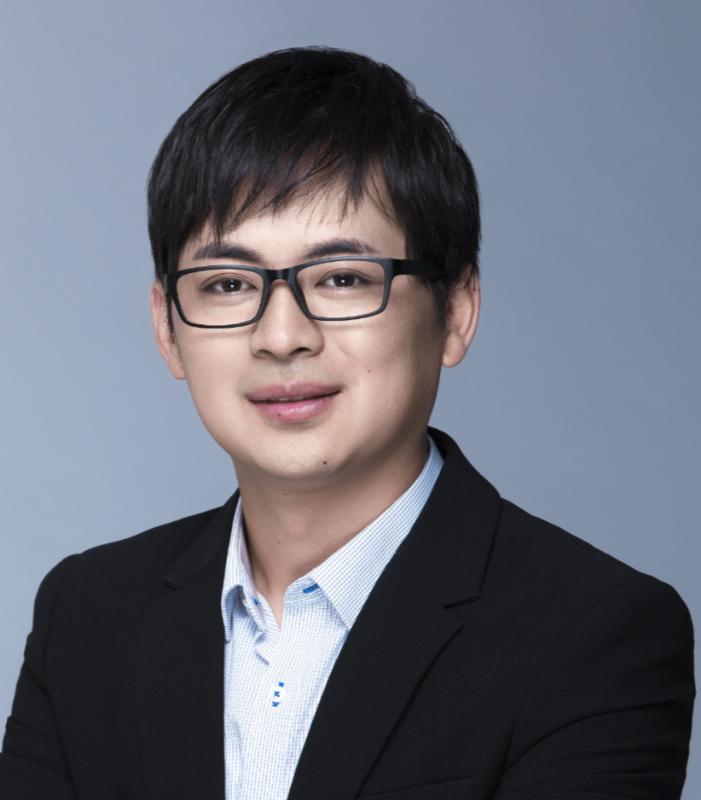
Liu Zhidan Hong Kong University of Science and Technology, Guangzhou |
Introduction:
Report Title: Research on AI-Driven Ridesharing
Report Introduction: As global carbon neutrality goals and intelligent transportation systems deepen, ridesharing, as a core smart transportation scenario, leverages the deep integration of ubiquitous computing, the Internet of Things, and 5G/6G communication technologies to become a key path to alleviating urban traffic congestion and promoting low-carbon transformation. However, in dynamic and complex scenarios, insufficient positioning accuracy due to GNSS signal attenuation in urban canyons, inefficient matching caused by the spatiotemporal heterogeneity of driver and passenger demand, and scheduling complexity caused by order-vehicle coupling continue to severely constrain system operational efficiency and service experience. This report focuses on the innovative application of AI technology across the entire shared mobility process, specifically reporting on research progress in three areas: 1) precise positioning in urban canyons driven by multi-source data fusion; 2) efficient driver-passenger pre-matching using spatiotemporal attention mechanisms; and 3) joint optimization strategies for order dispatch and vehicle scheduling to improve system efficiency and user experience. Furthermore, the report explores the potential of large-scale models in shared mobility scenarios and the key challenges they face. |

Liu Hao The Hong Kong University of Science and Technology, Guangzhou |
Introduction:
Report Title: Constructing and Applying Urban Intelligent Agents
Report Introduction: Continuous breakthroughs in large models are reshaping urban intelligent systems. Current spatiotemporal data mining and machine learning methods face a significant theory-practice gap in open urban scenarios, severely restricting their practical application. This report will introduce the core challenges facing urban intelligent systems in open urban environments, explore different paradigms for building urban intelligent agents based on large language models, and report on the team's recently proposed application of intelligent agents for urban knowledge understanding and decision optimization. |

Feng Jie Tsinghua University |
Introduction:
Report Title: Large-Scale Agent-Driven Individual Mobility Behavior Modeling in Urban Environments
Report Introduction: Human mobility behavior modeling is a core research topic in spatial data intelligence. Over the past decade, deep learning-based modeling paradigms have made significant progress. However, this approach still faces numerous challenges, such as the scarcity of high-quality training data, the difficulty of modeling the complex underlying behavioral mechanisms of individuals, and insufficient cross-regional spatial generalization. In recent years, breakthroughs have been made in large-scale models and agent-based technologies, demonstrating significant potential in world knowledge, generalization, and reasoning and planning. These technological advances provide new opportunities to address bottlenecks in mobility behavior modeling. This report explores a new paradigm for modeling individual mobility behavior using large models and intelligent agent technology. It explores its potential in modeling the underlying mechanisms of individual behavior, effectively addressing key challenges such as data loss and cross-regional generalization, particularly in the areas of spatiotemporal memory design and the utilization of world knowledge. |

Liu Jia Nanjing University |
Introduction:
Report Title: Unveiling the Mystery of RFID's RSSI Compression
Report Introduction: In 2024, the number of newly added RFID tags worldwide exceeded 50 billion, making it the most widely used sensing technology in the IoT. RSSI, a key metric in wireless communication systems, directly impacts RFID sensing accuracy. This report, for the first time, reveals the "RSSI compression" effect in RFID backscatter communications. Due to the dynamic characteristics of the tag's radar cross-section (RCS), signal strength exhibits nonlinear systematic deviations, severely limiting sensing accuracy. The report will deeply analyze the physical mechanism of this phenomenon and propose a correction model based on dynamic RCS and an innovative single-sampling cutoff power measurement scheme, providing a strong guarantee for improving the perception accuracy of backscatter systems such as RFID. |

Guo Xiuzhen Zhejiang University |
Introduction:
Report Title: Research on Passive IoT Technologies Based on RF Computing
Report Introduction: In the era of the Internet of Everything, the limited sensing capabilities and high energy consumption of IoT technologies hinder their wider deployment and application. To address these challenges, we explore the dynamics and trends of IoT development from a computational perspective, exploring new IoT-focused computing theories and key technologies. This report will share our recent research findings in passive sensing networks and explore research directions in passive IoT technologies based on RF computing. |

Zhang Huanhuan Beijing University of Posts and Telecommunications |
Introduction:
Report Title: Challenges and Optimization Methods for High-Quality Video Streaming in Mobile Interactive Scenarios
Report Introduction: In recent years, with the rapid development of mobile interactive applications such as HD video and cloud gaming, users have placed higher demands on low latency and a high-quality experience in video streaming. However, existing transmission mechanisms face significant bottlenecks in coping with network congestion and packet loss recovery, resulting in frequent video blurring and recovery times of several seconds, while also experiencing multiple freezes per minute. To address these challenges, our team collaborated closely with leading video transmission platforms. We conducted systematic measurements and analysis of interactive latency, image quality, and video frame characteristics under real-world network conditions. We proposed an intelligent video flow control algorithm (ACM MobiCom, ToN2024) and a refined FEC algorithm driven by frame-level data loss (NSDI 2025), effectively improving overall video quality and smoothness. These technologies have been widely deployed on real-world platforms. This report will share the key challenges we encountered during our research and the solutions we provided. |