Intelligent Human-Machine-Object Fusion Computing
August 22 (Friday) 9:00-11:30
Location: Shanghai Hall, 3rd Floor

Guest Profile

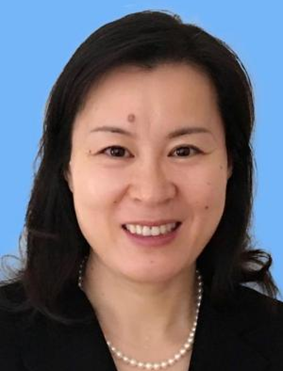
Sung Soo-jin

Shandong University

Introduction:
        Professor at Shandong University. Currently Dean of the School of Computer Science and Technology, Dean of the Inspur Artificial Intelligence College, and Director of the Digital Chain Integration Engineering Center of the Ministry of Education. He is an IEEE Fellow and a National High-Level Overseas Talent. His research focuses on blockchain theory and applications, security and privacy protection, and Responsible AI. He has served (or currently serves) on the editorial boards of numerous journals and chaired numerous international conferences. He is the founder of WASA, an international academic conference recommended by the China Computer Society, and the founding editor-in-chief of the international journal High-Confidence Computing. He has an H-index of 72 and has received over 23,000 citations on Google Scholar.


Report Title: Strong Interactions in Artificial Intelligence and the Triadic Fusion of Human, Machine, and Object


Report Introduction:  

       This report will report our preliminary exploration of the following questions: 1. The impact of artificial intelligence on human knowledge and civilization; 2. Strong intersections in artificial intelligence; 3. Strong intersections in artificial intelligence driving the triadic fusion of human, machine, and object.

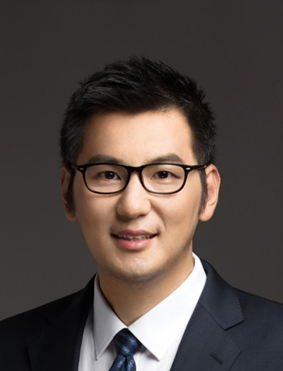
Liu Yunhuai

 Peking University

Introduction:
        Peking University Boya Distinguished Professor and Doctoral Supervisor, Vice Chairman of the ACM China Council, National Outstanding Youth, Young Top Talent of the Organization Department of the CPC Central Committee's "Thousand Talents Plan," and Project Leader of the National Key R&D Program. He graduated with a degree in Computer Science and Engineering from the Hong Kong University of Science and Technology. He has worked at Hewlett-Packard China, the Hong Kong University of Science and Technology, and the Shenzhen Institutes of Advanced Technology of the Chinese Academy of Sciences. In 2011, he joined the Internet of Things R&D Center of the Third Research Institute of the Ministry of Public Security, serving as Deputy Director, Researcher, and Second-Class Police Inspector. In 2016, he received the Third Class Individual Merit from the Ministry of Public Security and joined Peking University. His research focuses on smart cities, mobile computing, the Internet of Things, and crowd-sensing. He has published over 100 papers and twice won Best Paper Awards at the IEEE ICDCS and IEEE SANER International Conferences.


Report Title: Large-Scale Variable Computation of Metal Crystals Based on Artificial Intelligence


Report Introduction:

        With the rapid development and widespread application of artificial intelligence and deep learning, AI has achieved significant breakthroughs in many fields. Modeling, simulation, and scientific computing of macroscopically complex physical processes, especially continuum mechanics processes, are fundamental issues in engineering technology, with crucial applications in metal processing, aerospace, materials science, and other fields. Traditional numerical calculation methods mainly use finite element and finite difference methods. Their computational accuracy and efficiency are limited by the discretization of time and space. High-precision calculations usually require massive computing resources, and their serialized computing mode is difficult to benefit from supercomputing and other methods. Artificial intelligence methods have brought new opportunities for the rapid solution of such complex problems. In this report, we mainly introduce some of our recent progress in large-scale variable calculations of metal crystals, especially data-driven methods for problems that lack constitutive equations and numerical solutions. Compared with traditional solution methods, our method improves computational efficiency by 4-6 orders of magnitude while maintaining the same solution accuracy. In some practical applications, problems that take a week to solve can be reduced to seconds. Related methods have been applied and verified in the actual metal processing industry.

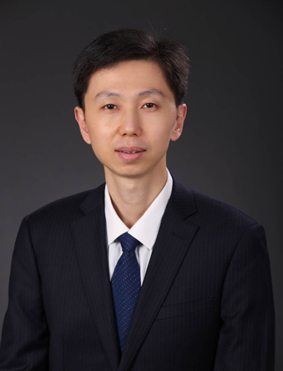
He Yuan

 Tsinghua University

Introduction:
      National Outstanding Young Scientist, doctoral supervisor at the School of Software, Tsinghua University, and deputy director of the Institute of Trusted Networks and Systems. He is also a distinguished member of the China Computer Federation, a standing member of the Internet of Things Committee, a standing member of ACM SIGBED China, and a member of the Industrial Internet of Things Technology and Applications Committee of the Chinese Automation Society. His research interests include the Internet of Things, wireless networks, mobile, and ubiquitous computing. He serves as Associate Editor-in-Chief of ACM TIOT and on the editorial boards of journals such as ACM TOSN, IEEE IoTJ, JCST, and Journal of Computer Research and Development. He also chairs the program committees of international conferences, including the flagship IoT conferences SenSys 2024, SECON 2022, EWSN 2019, and DCOSS 2018. He has received the Second Prize in Natural Sciences from the China Computer Society, the Test of Time Award from SenSys 2023, and the Best Paper Award from SenSys 2022, among other academic conferences.


Report Title: Acoustic Perception and Communication in the Intelligent Era


Report Introduction:

        With the rapid development of artificial intelligence and IoT technologies, acoustic perception and communication are playing an increasingly important role in the intelligent era. This report explores the research on acoustic perception and communication technologies in application scenarios such as drones, smart cars, and smart home appliances. It shares relevant research progress and discusses the challenges and future development directions of acoustic perception and communication in intelligent scenarios, providing a reference for the design and optimization of future intelligent systems.

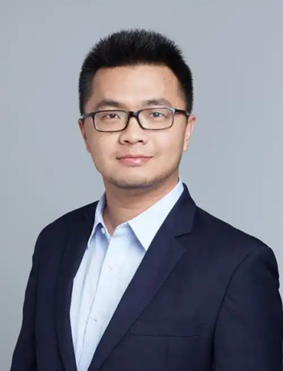
Liu Liang

 Beijing University of Posts and Telecommunications

Introduction:
      Professor of the School of Artificial Intelligence and Dean of the Institute of Science and Technology at Beijing University of Posts and Telecommunications, and recipient of the National Natural Science Foundation of China Outstanding Young Scholars Fund. He received his Ph.D. from the School of Computer Science at Beijing University of Posts and Telecommunications in 2009. During his doctoral studies, he conducted 14 months of visiting research at Texas A&M University in the United States. His research focuses on IoT architecture and intelligent perceptual computing. He has published over 200 papers in internationally renowned journals and conferences. He has received numerous teaching and research awards, including the Second Prize of the National Higher Education Teaching Achievement Award, the First Prize of the Ministry of Education Natural Science Award, the First Prize of the China Computer Society Natural Science Award, the First Prize of the China Electronics Society Science and Technology Progress Award, and the China Computer Society Outstanding Doctoral Dissertation Award.


Report Title: Research and Practice on IoT Edge-Side Intelligence


Report Introduction:

        This report introduces some of the progress the research team has made in recent years in IoT edge-side intelligence, including: VelaAI, an edge-side heterogeneous parallel inference acceleration framework, edge-side kernel-level fine-grained latency measurement methods, and an edge-side deep learning engine evaluation framework, as well as their applications in Xiaomi Pengpai OS and Xiaomi Auto.

Gao Hong

 Zhejiang Normal University

Introduction:
      Distinguished Professor and Doctoral Supervisor at Zhejiang Normal University. He is a "New Century Excellent Talent" from the Ministry of Education, Deputy Director of the CCF Internet of Things Committee, and Executive Director of the ACM China Council. His research areas include graph data and social network analysis, spatiotemporal series big data analysis and computation, data quality assessment and data cleaning, IoT data collection, and data transmission and distributed computing in passive sensor networks. He has presided over over 20 key R&D projects, including those funded by the National Natural Science Foundation of China and the Ministry of Science and Technology, and has published over 400 academic papers. The report has won one second prize in the National Science and Technology Progress Award and one first prize in the provincial and ministerial Natural Science Award.


Report Title: Distributed Data Storage Engine for New Hardware Architecture


Report Introduction: 

        Databases are considered the foundational technology of the software industry and are listed as one of the country's 35 key "bottleneck" technologies. The development of database management systems (DBMSs) is driven by data models, computing environments, and application requirements. In the digital economy, DBMSs face new demands for large capacity, high throughput, and low latency. The post-Moore's Law era has seen the emergence of various new hardware technologies, such as non-volatile memory (NVM), remote memory access (RDMA), and the new memory interconnect protocol (CXL). This requires the development of new database architectures to fully leverage these advantages. Existing DBMSs based on TCP/IP distributed interconnects suffer from high transmission latency and limited capacity expansion, fragmented and statically allocated memory resources, slow fault recovery, and high access latency. Currently, there is a lack of native distributed database systems that support these new hardware. This report introduces our research and development work on NVM/RDMA-based distributed memory pooling and data storage and management.