| Guest Profile |
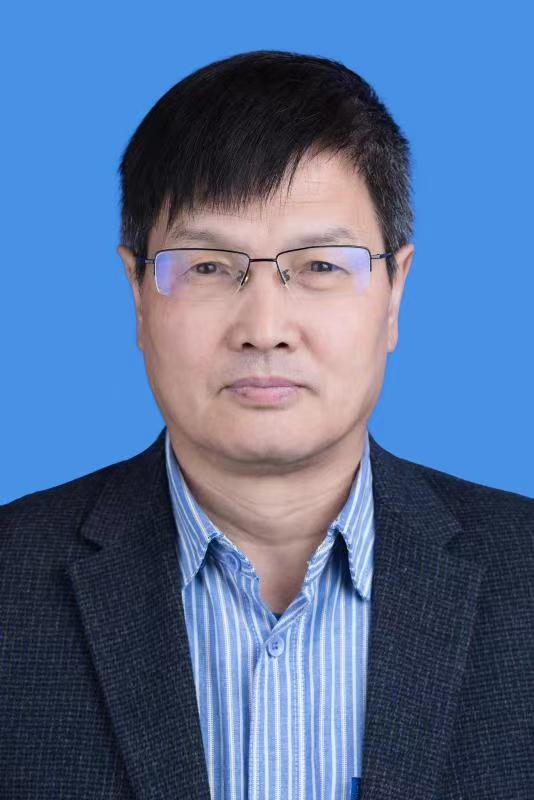
Zhou Xingshe
Northwestern Polytechnical University |
Introduction:
Zhou Xingshe is a professor at the School of Computer Science, Northwestern Polytechnical University; a CCF Fellow and the inaugural member of the CCF Advisory Committee; a member of the expert group for the National Key Project on Swarm Intelligence Operating Systems; and the president of the Shaanxi Computer Society. His research focuses on networked embedded computing and ubiquitous computing, distributed computing, cyber-physical fusion systems, and their applications. He has long led projects funded by national key funds, major national projects, and national defense pre-research. He has published over 100 academic papers, obtained over 20 invention patents, and received numerous provincial and ministerial science and technology awards, provincial and national teaching achievement awards, as well as the CCF Outstanding Education Award.
Report Title: Intelligent Robot Operating System
Report Summary:
With the rapid evolution of robotics technology toward intelligence and systematization, intelligent robot operating systems have become a core pillar of industrial innovation. This report explores how universities can respond to the demands of technological change, focusing on a three-pronged development path: talent cultivation, educational reform, and ecosystem development. It aims to provide a reusable educational paradigm for the development of related disciplines such as robotics engineering and artificial intelligence, helping to cultivate new engineering talent capable of mastering complex robotic systems. |
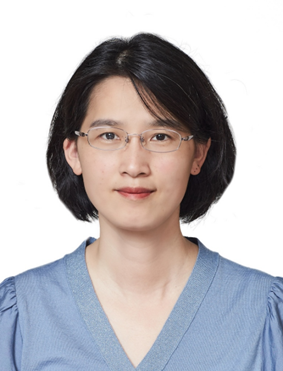
Li Ling
Chinese Academy of Sciences |
Introduction:
Researcher and PhD Supervisor at the Institute of Software, Chinese Academy of Sciences, Deputy Director of the Center for Intelligent Software Research, National Leading Talent, CCF Distinguished Member, and IEEE Senior Member. Her research focuses on intelligent computing and large models. She has published three books in Chinese and one book in English in related fields, and over 40 CCF Class A journal and conference papers. She has presided over numerous National Natural Science Foundation projects, National Key R&D Program projects, and CAS C-level Pioneer Special Projects. He has won the MICRO Best Paper Award at the CCF Class A Conference and the CAS Outstanding Scientific and Technological Achievement Award.
Report Title: Exploration and Reflection on Talent Cultivation for Intelligent Computing Systems
Report Abstract:
The rapid development of artificial intelligence (AI) technology, represented by large models, is profoundly reshaping the scientific research paradigm and industrial landscape. The development of AI technology and applications cannot be separated from the support of AI infrastructure, and there is an urgent need for intelligent computing systems talent with a comprehensive understanding of the software and hardware technology stack. The Chinese Academy of Sciences has launched the world's first "Intelligent Computing Systems" course, exploring the knowledge, thinking, and innovation systems required for intelligent computing systems talent, cultivating talent for the intelligent era. |
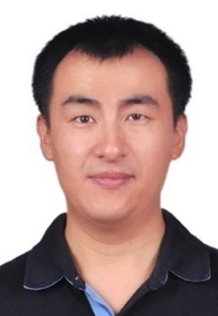
Guo Bin
Northwestern Polytechnical University |
Introduction:
CCF Council Member, Distinguished Member, Chairman of the CCF Xi'an Chapter, Doctor of Engineering, Professor and Vice Dean of the School of Computer Science at Northwestern Polytechnical University, recipient of the National Outstanding Young Scientist Fund, Deputy Director of the Key Laboratory of Human-Machine-Object Integrated Crowd Intelligence Computing of the Ministry of Education, Deputy Director of the Key Laboratory of Intelligent Perception and Computing of the Ministry of Industry and Information Technology, and Director of the Interdisciplinary Research Center for Computing and Art at Northwestern Polytechnical University. He was selected as one of the "New Century Excellent Talents" by the Ministry of Education in 2012 and a Young Talent in the National "Ten Thousand Talents Plan" in 2017. He is also a Highly Cited Scholar in China by Elsevier and a "2023 China Intelligent Computing Innovator" by MIT Technology Review. His research focuses on intelligent IoT and ubiquitous computing, swarm intelligence, and mobile crowd sensing. He has published over 150 papers in major domestic and international journals and conferences, including IEEE/ACM Transactions, and has published monographs such as "Human-Machine-Object Fusion Crowd Intelligence Computing" and "Introduction to the Intelligent Internet of Things." He is also promoting applications and technologies in key national needs, such as smart cities and social governance. He has received the First Prize in Natural Sciences from the Ministry of Education, the First Prize in Natural Sciences from Shaanxi Province, and Best Paper Awards from international conferences, including IEEE UIC'17, ISI'19, and BIBM'20. He serves on the editorial boards of leading international journals such as IEEE Transactions on Human-Machine Systems, Frontiers of Computer Science, and ACM IMWUT. He is a Senior Member of the IEEE.
Report Title: Practical Training of Top-Notch Innovative Talents in the Path of Chief Engineers in Intelligent Computing Systems
Report Introduction:
Humanity is entering an era of human-machine-object convergence and the intelligent interconnection of all things. Intelligent computing systems address the development needs of this era, encompassing AI algorithms, software, and hardware resources. They aim to achieve intelligent tasks at different levels or provide more efficient intelligent systems. The goal is to build computing systems with self-organizing, self-learning, adaptive, and continuously evolving capabilities, providing ubiquitous, flexible, efficient, green, and transparent computing services. This report will share the talent training reforms and practices implemented by Northwestern Polytechnical University to meet the needs of cultivating top-notch innovative talents in the Path of Chief Engineers in Intelligent Computing Systems. |
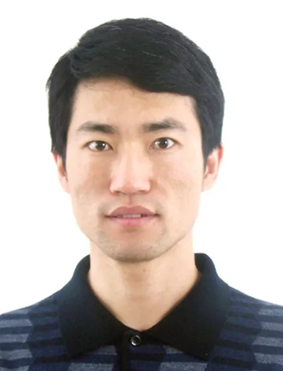
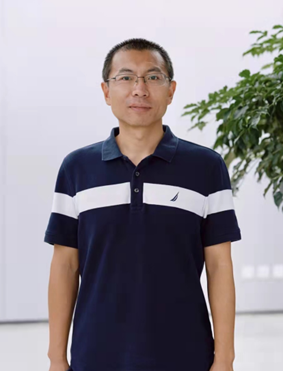
Hua Yu
Huazhong University of Science and Technology |
Introduction:
Professor at Huazhong University of Science and Technology, Distinguished Member of CCF, Distinguished Speaker of CCF and ACM, and recipient of the National Science Fund for Distinguished Young Scholars. He conducted postdoctoral research at McGill University in Canada and the University of Nebraska-Lincoln in the United States. His research focuses on novel storage devices, cloud storage systems, and non-volatile memory systems. His research has been published at international conferences such as OSDI, MICRO, FAST, HPCA, and SC. He served as program chair/vice chair at international conferences such as ICDCS 2021 and ACM APSys 2019, served on the awards committees of USENIX ATC (2018/2021) and ACM SIGOPS ChinaSys (2018/2019), and served as program committee member (PC or ERC) at conferences such as OSDI, FAST, USENIX ATC, ASPLOS, ISCA, MICRO, HPCA, and SC. His research has been recognized with First Prize in Natural Sciences from the Ministry of Education, First Prize in the Hubei Provincial Science and Technology Progress Award, and Second Prize in Information Science and Technology from the Chinese Institute of Electronics. His students have received awards including the ACM China Outstanding Doctoral Dissertation Award and the ACM ChinaSys Rising Star Award.
Report Title: Towards Integrated Hardware and Software Intelligent Storage Systems
Report Introduction:
With the rapid development of artificial intelligence and big data technologies, traditional storage systems face challenges in performance, energy efficiency, and intelligent management. This report focuses on integrated hardware and software intelligent storage systems, exploring theoretical foundations, technological development, and talent development. In terms of theoretical foundations, an innovative architecture integrating new storage hardware and intelligent algorithms is constructed. In terms of technical practice, a teaching method based on fundamental theory and focusing on prototype development is adopted, implementing key technologies such as intelligent caching and data management through a storage hardware experimental platform. In terms of talent development, the report aims to cultivate interdisciplinary talents with both architectural design capabilities and intelligent algorithm skills to meet the urgent needs of emerging fields for intelligent storage systems. The report will share practical experiences in curriculum development and industry-university-research collaboration, providing a reference for promoting educational innovation in the storage field. |
Wan Bo
Xidian University |
Introduction:
Professor and doctoral supervisor at the School of Computer Science, Xidian University. He received his bachelor's, master's, and doctoral degrees from Xidian University in 1998, 2001, and 2008, respectively. He has been teaching and researching at Xidian University since 2001. From 2015 to 2016, he was a visiting scholar at the University of Bristol, UK, conducting research on brain-computer interaction. In 2021, he became the Vice Dean of the School of Computer Science and Technology, Xidian University. In 2021, he was appointed Deputy Director of the Shaanxi Provincial Key Laboratory of Intelligent Human-Computer Interaction and Wearable Technology. His research focuses on embedded systems, intelligent human-computer interaction, and wearable technology. He has presided over and participated in projects funded by the National Natural Science Foundation of China, the National Key R&D Program, and the Shaanxi Provincial Natural Science Foundation. He has published over 30 high-level academic papers on projects such as TPDS and TMM, and has authorized and transferred numerous invention patents. He received two second-class Shaanxi Provincial Science and Technology Awards in 2006 and 2012, a second-class Scientific and Technological Progress Award from the Chinese Institute of Electronics in 2021, and a special award for outstanding scientific and technological research achievements from Shaanxi Higher Education Institutions in 2024.
Report Title: Research on Talent Cultivation and Teaching Materials Development for Human-Computer Interaction for Intelligent Computing
Report Introduction:
The rapid development of intelligent computing systems is profoundly changing the demands and paradigms of human-computer interaction (HCI). With the convergence of technologies such as artificial intelligence, edge computing, 5G/6G, and the Internet of Things, HCI is no longer limited to traditional graphical interfaces or touch controls, but is evolving towards more natural, intelligent, immersive, and personalized approaches. This report explores the emerging trends in the integrated development of intelligent computing and HCI, the changing talent demands driven by the rapid development of intelligent computing and HCI technologies, and the challenges and opportunities facing the current talent training system and teaching materials development. Drawing on the research and talent training work conducted by the Shaanxi Key Laboratory of Intelligent Human-Computer Interaction and Wearable Technology, this report presents the laboratory's exploration and practice in talent cultivation and teaching materials development in the field of intelligent HCI technology. |