Human-Machine-Object Fusion Heterogeneous Intelligent Agent Collaborative Computing
August 23 (Saturday) 3:45 PM-5:30 PM
Grand Ballroom A, 3rd Floor
| Guest Profile | |
|---|---|
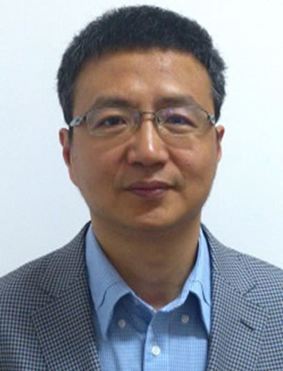
Xiao Nong National University of Defense Technology/Sun Yat-sen University |
Introduction:
Report Title: High-Performance Storage Technology for Multi-Computing Resources in the Computing Network
Report Summary: The computing network's resources include various types, such as supercomputing and artificial intelligence. This report will discuss the storage issues faced by the integrated development of high-performance computing and AI in the computing network. |
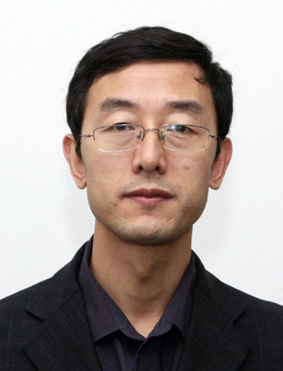
Li Keqiu Tianjin University |
Introduction:
Report Title: Research on the "Perception-Computation-Decision" Mechanism for Human-Computer Interaction
Report Abstract: In the new era of deep integration of man, machine, and objects, the digital and physical worlds are interpenetrating and coevolving at an unprecedented rate. This report focuses on smart life scenarios and proposes a new theory of human-computer interaction from the three levels of "perception-computing-decision-making". It mainly includes ubiquitous multimodal wireless perception fusion theory, distributed knowledge aggregation and collaborative computing strategy, and a multi-agent framework that decouples resources and intelligence, providing more efficient and reliable solutions for smart life. |

Li Xiangyang University of Science and Technology of China |
Introduction:
Report Title: Industrial Intelligence in Discrete Manufacturing: A Look at Vertical Domain Optimization and Common Key AI Technologies
Report Summary: The discrete manufacturing industry is currently facing demands for scale and flexible production. This requires rapid response and efficient manufacturing for high-variety, small-batch orders through flexible production systems and intelligent management. The Industrial Internet is a next-generation intelligent network formed by the deep integration of industrial production systems and internet intelligence. Its core lies in the deep fusion and application of information and physical systems, encompassing perception, cognition, analysis, decision-making, and control. As core enablers of the Industrial Internet, next-generation technologies such as the Intelligent Internet of Things, edge-edge cloud computing, and artificial intelligence are profoundly transforming every aspect of industrial production. In this report, I will share how to build AI models that incorporate industry knowledge, how to build efficient AI, and how to optimize decision-making through technologies such as intelligent solvers. I will also share some of our team's initial achievements and explorations in the theory, technology, systems, and applications of industrial intelligence in discrete manufacturing. These include the generation and efficient governance and management of high-quality, multi-source, heterogeneous, multi-modal, and cross-domain isolated data in manufacturing environments; the design of large-scale intelligent manufacturing industry models driven by mechanistic knowledge and data; and the design of collaborative reasoning mechanisms for large and small models to optimize decision-making efficiency and effectiveness. |
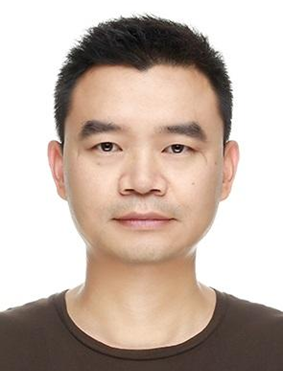
Xiao Bin Chongqing University of Posts and Telecommunications |
Introduction:
Report Title: Generative Image Detection Theory and Methods
Report Introduction: With the disruptive advancement of generative artificial intelligence technology, malicious incidents caused by generated images have become a major challenge in global digital security. Current mainstream generative image detection algorithms generally suffer from bottlenecks such as limited detection accuracy, insufficient cross-domain generalization, lack of multimodal processing mechanisms, and weak interpretability, making them difficult to meet the practical needs of large-scale deployment in real-world scenarios. This report focuses on the team's thinking and work on improving image detection accuracy, multimodal collaborative detection, enhancing detection robustness, and model traceability. |