CCF Ubiquitous Computing Committee Excellent Doctoral Forum
August 23 (Saturday) 15:30-17:30
Venue: 3rd Floor VIP Hall
| Guest Profiles | |
|---|---|
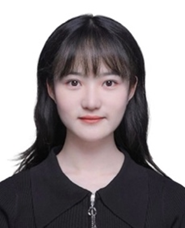
Ning Jingyi Nanjing University |
introduction:
Report Title: The “Past and Present” of Moiré Pattern Visual Perception
Report introduction: Traditional computer vision perception accuracy is typically limited to the pixel level, making it challenging to achieve “super-resolution” perception of the microscopic 3D world. Achieving ultra-high precision spatial perception remains a constant pursuit. This talk will introduce research on ultra-high precision spatial perception based on “moiré pattern” vision and its extensions. Historically, moiré patterns caused by high-frequency interference in image sensors were considered an obstacle to image quality, and researchers sought to eliminate them. However, Ning’s team took an alternative approach—shifting from “elimination” to “enhancement”—and innovatively explored a theoretical and technical framework for moiré-based visual perception, breaking current resolution limits and ushering in a new era for moiré vision. Applications in intelligent manufacturing, smart healthcare, and other cutting-edge fields will also be shared. |
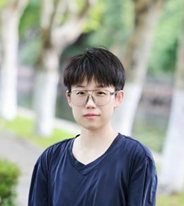
Liu Yimeng East China Normal University |
introduction:
Report Title: Research on Architecture and Key Technologies for Heterogeneous Crowdsensing Systems
Report introduction: Heterogeneous crowdsensing and computing paradigms face challenges such as the lack of a general configurable system architecture and missing core functional modules. This talk introduces a human-machine-thing integrated heterogeneous crowdsensing ubiquitous system architecture (CrowdOS) and its applications in public safety. The architecture addresses task representation and understanding, crowd entity management, real-time interaction, and collaborative scheduling. It offers a comprehensive, modular, and scenario-decoupled framework. Based on CrowdOS and its key technologies, the talk will further present multi-object tracking applications in complex spatiotemporal environments. |
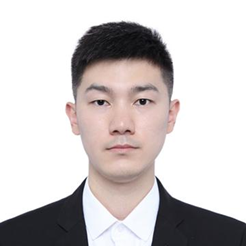
Chen Liyue Peking University |
introduction:
Report Title: Urban Spatiotemporal Forecasting via Region Partitioning and Knowledge Transfer
Report introduction: With the rapid development of smart cities, urban sensing networks and multi-source spatiotemporal data systems are improving, enabling better understanding and fine-grained management of urban operations. The performance of urban spatiotemporal forecasting depends not only on the model but also on effective region partitioning and cross-region knowledge transfer. Most existing methods assume manually defined partitions, ignoring their deep impact on tasks. Poor partitioning can severely degrade prediction accuracy. This talk focuses on optimizing region partitioning as the entry point, presenting a full-chain approach from partitioning to knowledge transfer, and discussing applications in different city forecasting scenarios. |
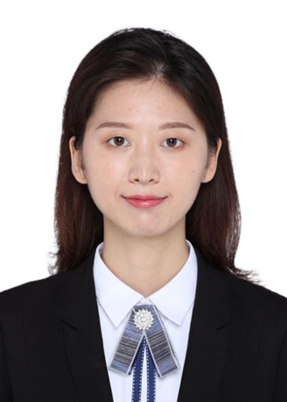
Wang Qianru Xidian University |
introduction:
Report Title: Spatiotemporal Sequence Prediction for Cities Based on Deep Probabilistic Graph Models
Report introduction: With the rapid development and popularity of IoT and mobile internet, urban spatiotemporal big data with temporal and geographic information have become vital for smart city development. This talk focuses on typical urban applications such as safety risk estimation and user demand forecasting. Addressing challenges such as sparsity, missing data, and dynamic changes in spatiotemporal data, it will introduce deep probabilistic graph-based methods for spatiotemporal prediction and causal impact evaluation, aiming to provide strong theoretical and practical guidance for future research in this field. |