AI Empowers Education - Intelligent Technology Drives Educational Transformation
August 23 (Saturday) 3:30 PM-5:30 PM
Location: Shanghai Hall, 3rd Floor

Guest Profile

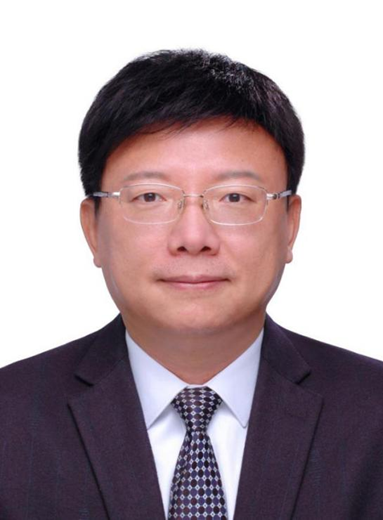
Zhao Jianguo

 Bohai University

Introduction:
       Currently President of Bohai University, PhD in Economics, Professor, and Doctoral Supervisor. He is a recipient of the State Council Special Government Allowance, the 11th National Fok Ying-Tong Outstanding Young Teacher Award, an expert in the National Employment Expert Database, an expert in the Ministry of Finance's Social Security Talent Database, a Liaoning Province Outstanding Teacher, a Liaoning Distinguished Professor, a 100-level talent in the Liaoning Province Hundred Thousand Talents Project, the first Liaoning Province Outstanding Graduate Instructor, and an Outstanding Talent in Liaoning Province's Higher Education Institutions. His teaching and research focus is on labor and social security. He is an Executive Director and Deputy Director of the Teaching Committee of the Chinese Society of Social Security, a Discipline Evaluation Expert of the Ministry of Education, a Decision-making Advisory Committee Member of the Liaoning Provincial Party Committee and Provincial Government, Deputy Director of the Liaoning Provincial Management Master's Teaching Steering Committee, and Deputy Director of the Liaoning Provincial General Higher Education Institutions Public Administration Teaching Steering Committee. He has published over 130 SSCI and CSSCI academic papers, 10 monographs and co-authored books, presided over or participated in over 10 national-level projects, over 30 provincial and ministerial-level projects, and received over 20 provincial and ministerial-level scientific research awards.


Report Title: Bridging the Digital Divide: The Universal Access and Sustainable Operation of AI Educational Resources — Practice and Exploration of Educational Equity Empowered by AI


Report Abstract:  

        This report analyzes the realities of the digital divide in education, including disparities in hardware facilities, resource access, and application capabilities, and their negative impacts on educational equity and balanced regional development. It also explores the unique value of AI technology in narrowing this gap. It proposes promoting government-led resource sharing and focused support for universal access from the supply side, while also enhancing the accessibility of educational resources through improved infrastructure, strengthened teacher and student training, and simplified tool accessibility. By exploring sustainable operational mechanisms through models such as government procurement of services, a combination of "public welfare + marketization," and school-enterprise collaboration, AI educational resources can bridge the digital divide and achieve universal access while sustaining development while balancing commercial logic with public welfare initiatives. Ultimately, this will establish a virtuous ecosystem where "AI technology empowers educational equity, and educational equity feeds back into scientific research and innovation."

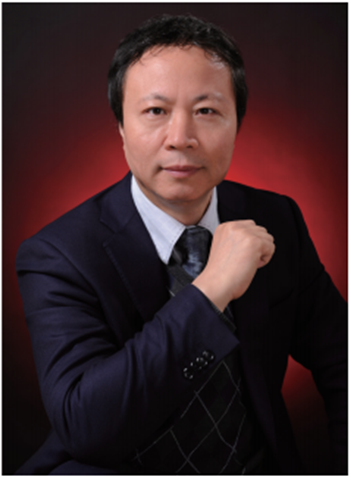
Zhu Zhiliang

Northeastern University

Biographies:
        Professor II and Doctoral Supervisor at Northeastern University. Member of the State Council Software Engineering Discipline Review Group, recipient of the State Council Special Government Allowance, the May 1st Labor Medal of Liaoning Province and Shenyang City, and the Shenyang Model Worker Award, Fellow of the China Institute of Communications, leader of a national teaching team, Liaoning Province Outstanding Teacher, provincial-level professional leader of Liaoning Province's higher education institutions, among the top 100 in the Liaoning Province Hundred Thousand Talents Project, and Shenyang Leading Talent. He currently serves as a member of the Software Engineering Teaching Steering Committee of the Ministry of Education, Executive Director of the Teaching and Research Branch of the China Higher Education Society, Executive Director of the University Quality Education Research Branch of the China Higher Education Society, and Vice President of the Liaoning Branch of the Laboratory Research Branch of the China Higher Education Society. As project leader, he has twice won the Second Prize of the National Teaching Achievement Award, two of his courses have been designated as national-level quality courses, and he has published over 200 academic papers. He was named an Elsevier Highly Cited Researcher in 2020, 2021, 2022, and 2023.


Report Title: AI Empowers Education and Teaching


Report Abstract: 

        The report points out the needs and paths for educational reform based on the challenges, impacts and influences brought by the new round of scientific and technological revolution to human society. In particular, the report points out that the impact of the new generation of artificial intelligence on other fields and industries will inevitably extend to the field of education. It focuses on the connotation of digital education, smart education and the application of AI technology in the field of education and teaching, and proposes the goals of innovating educational concepts, reshaping educational processes, reconstructing educational content, innovating educational models, and jointly building an educational ecology. At the same time, it also provides basic measures on how to improve the AI literacy and capabilities of teachers and students. Finally, it gives suggestions on issues that need attention in the application of AI technology.

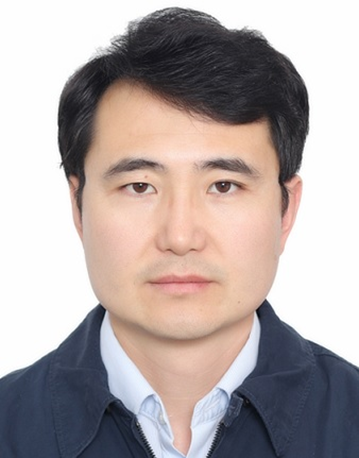
Fan Xin

 Dalian University of Technology

Introduction:
        Professor and doctoral supervisor at Dalian University of Technology, and Dean of the School of Software and the School of International Information and Software. He received his Bachelor's and Doctoral degrees in Engineering from Xi'an Jiaotong University in 1998 and 2005, respectively. He conducted postdoctoral research in the United States from 2006 to 2009. His research focuses on visual computing and health computing. He has led two key projects of the National Natural Science Foundation of China and several general and youth projects. He has published over 100 papers in leading journals and conferences in his field. He was selected for the Ministry of Education's "New Century Excellent Talent Support Program" and received the First Prize in Natural Sciences of Liaoning Province. Five of his papers have been selected as Best Papers or Candidates at international conferences. His research has been applied to meet national needs and in the field of service robotics. He is committed to the exploration and practice of cultivating international software engineering talents. He has received one Second Prize in National Teaching Achievement Award and two Liaoning Provincial Teaching Achievement Awards. He is the director of a National First-Class Undergraduate Program and a Liaoning First-Class Course.


Report Title: Building a strong foundation for software development: enabling key software innovation and cultivating distinctive talent


Report Introduction:

        新时代以人工智能技术为引领的前沿趋势,正在重塑全球科技发展图景。面对世界百年未有之大变局,软件工程技术创新与产业升级迫切需要一批具备前瞻性和创新能力的拔尖人才,支撑国家实现自立自强。 软件工程作为支撑信息技术产业的关键,其拔尖创新人才培养至关重要。本报告分别从方向、人才和平台三个方面,分享大连理工大学围绕国家战略,确立“AI+软件”特色方向,聚焦智能无人系统与CAD/CAE高可靠工业软件,培养拔尖创新人才,通过“校内学科交叉”和“校外产学研”双循环机制汇聚高水平队伍,并构建多元化平台支撑“科教+产教”融合,保障具有国际视野与创新能力的拔尖创新人才培养。

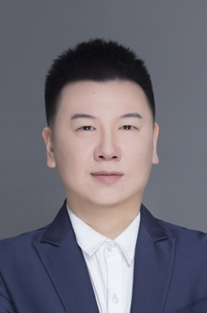
Wang Xiaohua

 ChinaSoft International Education Technology Group

Introduction:
      Vice President of ChinaSoft International Education Technology Group and Dean of the Excellence Research Institute, he is a corporate expert in engineering education certification for the Ministry of Education, an expert in undergraduate education and teaching review and evaluation for the Ministry of Education, a certified senior information systems project manager for the Ministry of Human Resources and Social Security and the Ministry of Industry and Information Technology, an Oracle certified system architect, and an executive director of the Smart Education Branch of the Higher Education Society of the Ministry of Education. With over a decade of experience in large-scale project architecture design and management, and over a decade of experience in industry-education integration, he possesses a deep understanding of industry development and talent needs. He leads a team in long-term research on industry development and talent needs in various fields, including software development, Hongmeng, fintech, industrial software, and information technology innovation. He develops an AI-driven public platform for education, science, and innovation. As a corporate expert, he participates in the development and revision of talent training programs and curriculum systems at multiple universities.


Report Title: New Talent Demands in the AI Era


Report Introduction:

        This report analyzes the profound shift in talent demand in the AI era. Drawing on authoritative data from the World Economic Forum and other sources, this report analyzes the typical applications of core technologies across various industries, summarizes talent capability models for the AI era, and demonstrates how AI is driving enterprise transformation. Furthermore, drawing on ChinaSoft International's practical experience, the report outlines the path for software companies to transition to AI, including upgrading service capabilities, AI-enabled internal operations, and transforming talent structures. It emphasizes that a "learning and using AI" training strategy and innovative, practice-oriented educational models are key to addressing the talent challenges of the new era.

Zhang Shoukai

 China Unicom Smart Education Corps

Introduction:
       An education industry expert with the China Unicom Smart Education Corps. He conducts systematic and in-depth research in areas such as education digital transformation, smart campus overall planning, university data governance systems, university service governance systems, digital resource development, and AI-enabled education and teaching. As a corporate expert, he has participated in the planning and construction of information technology projects for many well-known domestic universities.


Report Title: China Unicom's Mingxi Smart Education model empowers educational scenario applications


Report Introduction:

        1. Introduction to the capabilities of the Mingxi Intelligent Education Big Model 2. Sharing of educational application scenarios enabled by the Mingxi Intelligent Education Big Model