Universal Computing Industry-Academia Collaboration Forum
August 22 (Friday) 15:30-17:30
Location: 3rd Floor, Shanghai Hall
| Guest Introductions | |
|---|---|
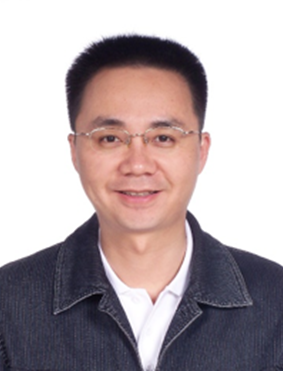
Wang Yasha Peking University |
Introduction:
Talk Title: Medical Domain Large-Scale Model Systems
Abstract: With the rapid development of large models, their application in vertical fields such as healthcare continues to deepen. Previous research has shown that while general large models have improved their generalization, knowledge search, and logical reasoning abilities, they cannot be directly applied to healthcare scenarios for three main reasons: first, insufficient long-tail knowledge learning; second, lack of some capabilities; and third, the mismatch of scene constraints. This talk will first analyze the challenges of applying large models to healthcare and then introduce the solutions developed by Wang's team. The presentation will conclude with a demonstration of the medical domain large-scale model system “XiaoBei Health” developed by the team and an outlook on future research directions. |

Zhao Yunlong Nanjing University of Aeronautics and Astronautics |
Introduction:
Talk Title: Autonomous Coordination of Heterogeneous Unmanned Clusters
Abstract: This talk focuses on the application trends of autonomous coordination of heterogeneous unmanned clusters. It analyzes the research objectives of autonomous coordination technology and the core challenges of real-time performance, adaptability, and robustness. The speaker will introduce three specific research projects: path planning for vehicle-machine coordination in energy-limited scenarios, collaborative coverage strategies for heterogeneous drones in communication-limited environments, and methods for maintaining collaborative formations and target navigation in drone clusters. These studies aim to enhance the autonomous coordination capabilities of heterogeneous unmanned clusters in various scenarios, providing reference for related research and applications. |

Wu Kaishun Hong Kong University of Science and Technology |
Introduction:
Talk Title: Human-Centered Perception and Smart Healthcare: From Individual State Perception to the Future of Distributed Healthcare
Abstract: At the key turning point from environmental perception to “human-centered cognition,” ubiquitous sensing and distributed intelligence are reshaping the technological foundation of next-generation healthcare services. This talk will systematically introduce our latest work on cross-modal perception, low-power communication, and the construction of distributed healthcare systems. We designed a LoRa communication framework for wide-area deployment, developed wearable devices for ear canal and dental state sensing, and implemented a collaborative understanding system that bridges physiological and semantic levels. These studies aim to build a secure, intelligent, and collaborative distributed healthcare system centered on individuals, providing a solid foundation for a more inclusive, efficient, and trustworthy future healthcare system. |
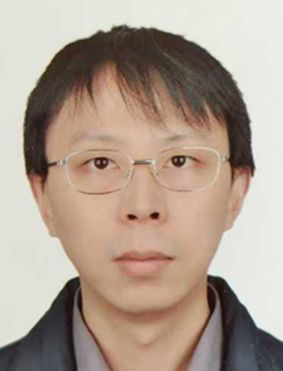
Zhang Xiaofan OPPO |
Introduction:
Talk Title: RAG Systems for Smart Devices
Abstract: This talk focuses on the Retrieval-Augmented Generation (RAG) systems for smart terminals, exploring their practical applications, core challenges, and future development. The speaker will analyze the scenarios and implementation of RAG systems on terminal devices, highlight key technical and product challenges, and discuss the future development trends and technical evolution of the field. The talk aims to present the current state and future outlook of RAG systems for smart terminals. |
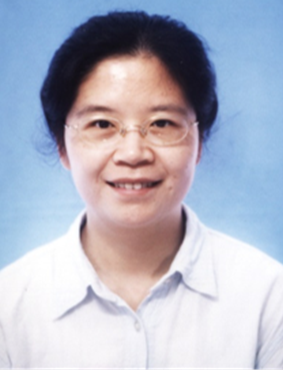
Jin Beihong Chinese Academy of Sciences |
Introduction:
Talk Title: Explorations in Contactless Health Perception
Abstract: Monitoring and maintaining individual health is of critical importance, and disease monitoring and early warning are essential parts of health management. Contactless sensing of individual health states is not only a desirable option from a user needs perspective but also an inevitable trend in technological development. This talk will provide an overview of contactless health perception and introduce recent progress in contactless ECG sensing, contactless blood pressure sensing, and contactless sleep monitoring. |