Forum on Cross-Innovation Talent Cultivation for Unmanned Equipment Operating Systems
Aug 16, 2026 13:00–15:00 Lotus Hall, 5F
Forum introduction to be added.
| Session Chairs | |
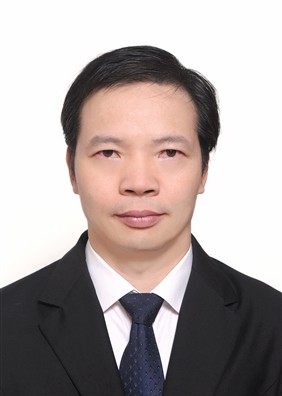 Kenli Li Chair Vice President, Hunan University |
Biography: Kenli Li is Vice President of Hunan University and Director of the National Supercomputing Center in Changsha. He is a recipient of the National Award for Excellence in Innovation, a National High-Level Talent, a CCF Fellow, a Baosteel Outstanding Teacher, and a recipient of the State Council Special Government Allowance. He leads the Ministry of Education Innovation Talent Base for High-Performance Computing and serves as Director of the Engineering Research Center of High-Performance Computing Application Software Technology (Ministry of Education). He is Vice Chair of the National Supercomputing Innovation Alliance, a member of the Expert Committee of the New-Generation AI Industry Technology Innovation Alliance, a member of the overall expert group of the National Key R&D Program on High-Performance Computing, an IEEE Senior Member, Chair of CCF Changsha, and Vice Chair of the Hunan Computer Federation. He also serves as associate editor for IEEE TC / TSUSC / TII and as an editorial board member of Journal of Computer Research and Development. He has led more than 40 national and provincial projects, including National Key R&D Program projects and NSFC key projects. As the first contributor, he has received two Second Prizes of the National Science and Technology Progress Award, one China Patent Gold Award, and four first-class provincial/ministerial science and technology awards, as well as the National Science and Technology Progress Award (Innovation Team, ranked 13th). His research focuses on high-performance computing scheduling and applications, with more than 200 papers in CCF-A venues and IEEE/ACM transactions, and more than 150 authorized patents and software copyrights. |
 Zhuo Tang Co-Chair Hunan University |
Biography: Zhuo Tang is Dean of the College of Information Science and Engineering and Dean (concurrent) of the College of Cyberspace Security at Hunan University. He also serves as Director of the Culture and Media Computing Research Center, Chief Engineer of the National Supercomputing Center in Changsha, a National High-Level Talent, and Director of the Hunan Engineering Research Center of Computing Power Networks. He has long worked on high-performance distributed computing and trusted computing. He has led more than 20 major projects, including foundational strengthening major projects, National Key R&D Program projects, a National STI 2030 “New Generation Artificial Intelligence” major project topic, and key/general NSFC projects, as well as major science and technology projects of Hunan Province and Changsha. He has published more than 220 papers in leading journals and conferences, holds 66 invention patents (including one international patent), and has achieved technology transfer worth nearly RMB 100 million. He also contributed to a provincial/ministerial general standard for domestic cloud computing technologies. His awards include Second Prizes of the National Science and Technology Progress Award (2019, 2023), a First Prize of the Ministry of Education Scientific Research Outstanding Achievement Award (2025), first prizes in Hunan technological invention awards, a First Prize of the Wu Wenjun AI Science and Technology Progress Award, and a First Prize of the China Industry–University–Research Collaboration Innovation Achievement Award. |
| Speakers | |
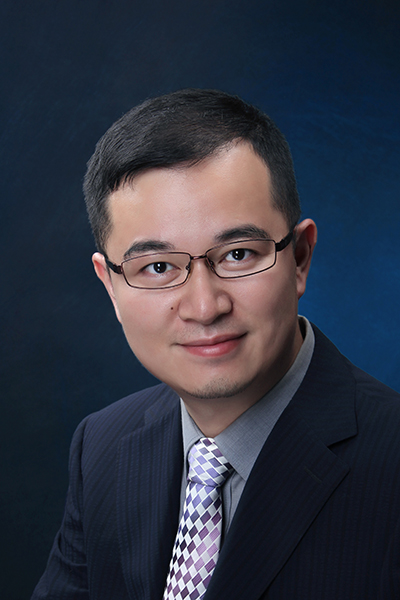 Wei Wang Speaker 1 Hunan University |
Talk: 无人操作系统的人机环交互设计思考 Full bio and abstract on the Chinese page. |
 Yu Jiang Speaker 2 Tsinghua University |
Talk: 操作系统漏洞挖掘思考与实践 Full bio and abstract on the Chinese page. |
 Rong Chen Speaker 3 Shanghai Jiao Tong University |
Talk: AI时代的算力硬件调度关键技术研究 Full bio and abstract on the Chinese page. |
 Zhao Liu Speaker 4 Peng Cheng Laboratory |
Talk: 靶场即服务关键技术及推广应用 Full bio and abstract on the Chinese page. |
 Jun Lu Speaker 5 Tsinghua University |
Talk: 连接存储与执行: 面向按需应用流式加载的语义感知虚拟总线 Full bio and abstract on the Chinese page. |
 Yonghao Wang Speaker 6 Hunan University |
Talk: 天空中的新居民:无人机技术漫谈 Full bio and abstract on the Chinese page. |