Human-Vehicle-Infrastructure Collaborative Computing and Communication
August 22 (Friday) 9:00-11:30
Location: Nanjing Hall, 3rd Floor

Guest Profile

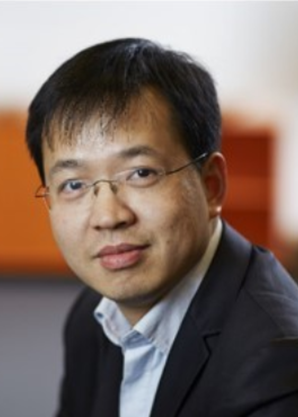
Zhang Yan

University of Oslo, Norway

Introduction:
       Zhang Yan, IEEE FELLOW and Member of the European Academy of Sciences, is a tenured professor and doctoral supervisor at the School of Information Engineering at the University of Oslo, Norway. He graduated from Nanyang Technological University, Singapore in 2005 with a PhD in Electrical and Electronic Engineering. His research focuses on the Internet of Things and edge intelligent networks. He currently serves as Associate Editor of IEEE Communications Magazine; Editor of IEEE Transactions on Green Communications and Networking; Editor of IEEE Communications Surveys & Tutorials; Editor of IEEE Internet of Things; Editor of IEEE Vehicular Technology Magazine; and Associate Editor of IEEE ACCESS. He also serves on the editorial boards of several core journals in China, including China Communications, Journal of Communications and Information Networks (JCIN: Journal of Communications and Information Networks), and Journal of Internet of Things. He has served as the technical committee chair or chapter chair of many international academic conferences, such as IEEE GLOBECOM 2017, IEEE VTC-Spring 2017, IEEE PIMRC 2016, IEEE CloudCom 2016/2015, and IEEE SmartGridComm 2015. He is currently the vice chairman of the IEEE Green Communications and Computing Technical Committee and the chair of the Smart Grid Subcommittee.


Report title: Vehicular Edge Computing and Networks


Report Introduction: 

       We first created "Vehicle Edge Computing (VEC)" in 2017, which is currently the most active research area in Internet of Vehicles. In this talk, we will first present the key concepts and main principles related to vehicle edge computing. Then, we will present the recent studies on computation offloading, edge caching, joint design and Blockchain for VEC. Different optimization and machine learning approaches have been exploited to address key challenges, including game theory, federated learning and deep reinforcement learning. Open research issues and future development will be also pointed out throughout the talk.

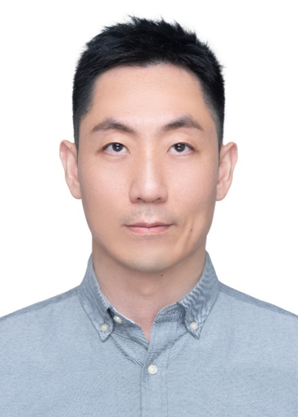
Guo Lei

 Chongqing University of Posts and Telecommunications

Introduction:
       Guo Lei is the Dean of the School of Communications at Chongqing University of Posts and Telecommunications, a doctoral supervisor, and a recipient of the National Science Fund for Distinguished Young Scholars. He graduated from the University of Electronic Science and Technology of China with a degree in Communications and Information Systems. He has long been engaged in communications network research and has published over 200 papers. He has presided over over 20 projects, including those funded by the National Science Fund for Distinguished Young Scholars and the Fok Ying-Tong Young Teachers Fund. Many of his research results have been applied in industry. He previously conducted research at the Hong Kong Polytechnic University for two years. He serves on the editorial board of domestic and international journals and on the program committee of international conferences. He served as Executive Chairman of the 306th Young Scientists Forum of the China Association for Science and Technology. He currently serves as Vice Chairman of the Youth Work Committee of the China Institute of Communications. He has received the Ministry of Education Natural Science Award, the Liaoning Provincial Science and Technology Progress Award, the Ho Ying-Tong Young Teacher Award, the Natural Science Award, the Science and Technology Progress Award, and the Youth Science and Technology Award of the China Institute of Communications. He has also received the Sichuan Province Outstanding Doctoral Dissertation Award and the Best Paper Award at an international conference.


Report Title: Integrated Laser Energy Transmission and Communication Technology for the Low-Altitude Economy


Report Introduction: 

        In low-altitude economy scenarios, drone-based power grid inspections face challenges due to limited range and communication. Therefore, integrated laser energy transmission and communication technology has emerged as a potential solution. This technology uses free-space lasers to simultaneously achieve remote energy transmission and data exchange, addressing drones' limited range and communication issues. In the future, with the miniaturization of optical devices and the optimization of intelligent control algorithms, this technology will not only be used in power grid environments but also be expanded to areas such as new energy vehicles, becoming a key technology for the convergence of energy and information.

Zhang Yin

 University of Electronic Science and Technology of China

Introduction:
        Zhang Yin is a researcher and doctoral supervisor at the School of Information and Communication Engineering at the University of Electronic Science and Technology of China. He is the Chief Scientist of the Guangdong Intelligent Robotics Research Institute, a Fellow of the British Computer Society (BCS) and a Distinguished Member of CCF. He was formerly the Co-Chair of the IEEE Computer Society Big Data STC. He has long been engaged in research in mobile computing, edge intelligence, blockchain, and intelligent network services and applications. He has presided over eight national and provincial/ministerial projects, including one National Key R&D Program project, four National Natural Science Foundation projects, one Guangdong Provincial Key Area R&D Program project, one Ministry of Education special fund, and one Ministry of Finance research project, with cumulative funding exceeding 13 million RMB. He has published over 80 papers as first or corresponding author (including papers in CCF Category A journals and conferences such as TMC, TKDE, TSC, INFOCOM, and IJCAI, as well as over 40 papers in CAS Zone 1 journals). Seventeen of his papers have been selected as ESI Hot or Highly Cited Papers. His citations have exceeded 9,000 times on Google Scholar, with an h-index of 46. He holds six authorized invention patents. He was selected for the Sichuan Provincial Talent Program, a Global Highly Cited Scientist, and a Highly Cited Chinese Scholar. He has received seven awards, including the IEEE Systems Journal Best Paper of the Year award. He has served on the editorial boards of renowned SCI journals such as IEEE Network, IEEE Systems Journal, IEEE Sensors Journal, and Information Fusion.


Report Title: Key Technologies and Applications of Connected Vehicles for Emergency Rescue


Report Introduction:

        This report will introduce the research work and latest progress of the Guangdong Provincial Key Area R&D Project, "Development and Application Demonstration of Intelligent Emergency Rescue Systems for Urban Major Disasters." The report will focus on key technologies for human-vehicle-object collaboration for emergency rescue and their application in real-world scenarios. Finally, the report will introduce the research team's representative research work in the field of connected vehicles in recent years.

Chen Chao

 Chongqing University

Introduction:
        Chen Chao is a professor at the School of Computer Science and the National Key Laboratory of Mechanical Transmission for Advanced Equipment at Chongqing University. He is a recipient of the National Natural Science Foundation of China Outstanding Young Scientist Fund. He is an Outstanding Member of the China Computer Federation, a Standing Committee Member of the Ubiquitous Computing Professional Committee, and an Executive Member of the Intelligent Robotics Professional Committee. He has long been engaged in research in spatiotemporal data intelligence and mobile embodied intelligence. He has published over 100 papers as the first or corresponding author in international journals and conferences, including TRO, TMC, CVPR, ICCV, SIGMOD, and VLDB. The proposed iBOAT real-time abnormal trajectory detection algorithm is recognized by international scholars as a state-of-the-art algorithm. It has been deployed and commercially used across all Didi Chuxing business lines and has become Didi Chuxing's core competitive technology. He has published one academic monograph in English. He ranked second and won the Chongqing Municipal Technology Invention First Prize.


Report Title: Research on Urban Region Representation Learning Methods


Report Introduction:

        Urban regions, as indispensable components and core management units of cities, play a key role in shaping urban spatial structure, functional organization, and dynamic evolution. With the continuous acceleration of urbanization, urban systems are becoming increasingly complex, placing higher demands on the refined understanding and intelligent management of urban regions. Region representation learning, a core technology for modeling regional semantic features, aims to transform regions with complex spatial structures and attributes into low-dimensional, structured, and semantically rich vector representations. Learning high-quality regional representations not only helps improve the performance of various urban computing models, but also provides strong support for multi-domain applications in smart cities, further promoting the development of cities towards more livable, sustainable, and intelligent environments.