Smart Education in the Era of Human-Machine Collaboration: Opportunities and Challenges Brought by Generative AI
August 23 (Saturday) 3:45 PM-5:30 PM
Location: Grand Ballroom C, 3rd Floor
| Guest Profile | |
|---|---|
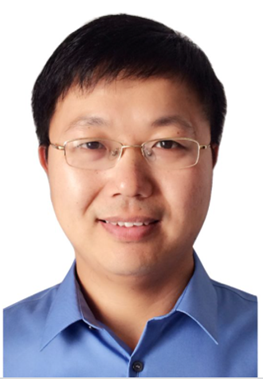
Peng Xin Fudan University |
Introduction:
Report Title: Software Talent Cultivation in the AI Era
Report Introduction: The rapid development of large language models and multimodal large models is driving the advent of a new era of intelligence, characterized by the integration of man, machine, and objects and the intelligent interconnection of all things. Software-defined thinking and related technologies support the on-demand integration of human, machine, and physical resources, and intelligence is becoming a core feature of all types of integrated human-machine-physical systems. With the wave of intelligent development, will AI models, represented by neural networks, gradually replace software? Conversely, will generative AI spell the end of programming? This report, building on the background, explores these two questions and explains what kind of software talent is needed in the intelligent era. |

Jiang Hua Dalian University of Technology |
Introduction:
Report Title: A Competency Structure Model and Evolutionary Patterns of University Teachers' Use of Generative Artificial Intelligence
Report Introduction: The rapid rise of generative AI is driving profound changes in university teaching models, faculty roles, and educational governance. The role of faculty is gradually shifting from traditional classroom lecturers to instructional designers and collaborators, and generative AI tools are evolving from auxiliary backend tools to collaborative partners in the classroom. Against this backdrop, human-computer collaborative work methods are becoming increasingly important for university faculty in their daily teaching and research. This report will focus on the competency structure model and its evolutionary patterns for university teachers using generative AI, helping to clarify the underlying logic of teacher competency development and providing a reference for future professional development. |

Guo Chaoyou Senior Product Director, TAL Education Group |
Introduction:
Report Title: Exploring Personalized Learning in the Big Model Era
Report Introduction: The education industry often refers to the "impossible triangle," which is the difficulty of achieving scale, personalization, and high quality simultaneously. However, with the advent of the big model era, the entire education industry is expected to gradually overcome this "impossible triangle." Specifically in knowledge learning scenarios, how can big models be used to address individual student challenges, such as misunderstanding knowledge and difficulty in completing exercises? The TAL Education Xueersi Big Model team is experimenting with scenarios like question-answering and targeted learning, accurately diagnosing students' weaknesses and providing one-on-one, real-time answers. This has led to a model with greater practical value and potential for personalized and targeted learning. |

Lu Yu Beijing Normal University |
Introduction:
Report Title: Constructing Human-Computer Collaborative Educational Agents
Report Introduction: With the rapid development of generative AI technologies such as large models, educational agents, as a key vehicle for AI-enabled education, are showing broad application prospects. This research focuses on the design and application of educational agents supported by large models, exploring their system architecture, key technologies, and model construction. On this basis, this paper focuses on typical human-machine collaborative education scenarios, such as classroom teaching and teacher research, analyzing their practical application effects, potential risks, and challenges. The aim is to provide theoretical references and technical solutions for the deep integration of intelligent agents and education. |

Xu Yonghui Shandong University |
Introduction:
Report Title: Learning Science and Education Empowered by Big Models
Report Introduction: The groundbreaking development of AI big models has brought about a paradigm shift in the fields of learning science and education. This report systematically explores how big models, through their core capabilities (language understanding, knowledge reasoning, and multimodal processing), reconstruct the theoretical framework of learning science: deepening cognitive process modeling, enabling dynamic personalized learning, expanding context construction and metacognition cultivation, and promoting the transformation of education from "knowledge transfer" to "cognitive partnership." At a practical level, big models are reshaping three levels of scenarios: micro-teaching (intelligent guidance/dynamic content generation), meso-systems (curriculum mapping/adaptive assessment), and macro-ecological systems (resource equity/lifelong learning), significantly improving educational efficiency and accessibility. However, technological empowerment comes with significant challenges: model illusions, algorithmic bias, cognitive inertia risks, and data privacy issues urgently need to be addressed, while also requiring the reconstruction of teacher roles and evaluation systems. Future education requires a new paradigm of "human-machine collaboration"—developing reliable, specialized models, innovating teaching methods, and establishing ethical standards and policy governance frameworks to enable big models to become educational enhancement tools that support human intelligence. |