| Guest Profile |

Wang Dangxiao
Beihang University |
Introduction:
Professor and doctoral supervisor at Beihang University. Deputy Director of the National Key Laboratory of Virtual Reality Technology and Systems. Deputy Director of the Robotics Institute at Beihang University. Visiting scholar at Stanford University, Karolinska Institutet in Sweden, and University of North Carolina.
Research areas include machine haptics, cognitive haptics, brain-computer interaction, and medical robotics. He has published over 30 IEEE Transactions on Computer Science as first and corresponding author and one English book published by Springer. He has overseen over 10 projects, including those under the National Key R&D Program, the National Science and Technology Support Program, and the National Natural Science Foundation of China. He has won one first prize in technological invention from the Ministry of Education and one first prize in the Science and Technology Progress Award from the Chinese Institute of Electronics. He has been nominated for the Best Paper Award at the IEEE International Conference on Robotics and Automation (IEEE ICRA 2011), a leading international conference in the field of robotics and automation; the Best Paper Award at the renowned haptics conference (EuroHaptics 2016); the Best Paper Award at the National Conference on Human-Computer Interaction (CHCI 2020); and the Best Paper Award at the top haptics conference (IEEE World Haptics Conference 2023).
He is also the General Chair of the Asia Haptics Conference (AsiaHaptics 2022). He has served as the Chair of the Haptics Technical Committee of the Institute of Electrical and Electronics Engineers (IEEE), an Associate Editor of the IEEE Transactions on Haptics, and a Guest Editor of the IEEE Transactions on Industrial Electronics. He is also the Deputy Director of the Force and Haptic Perception and Interaction Professional Committee of the Chinese Instrument Society, the Deputy Director of the Human-Computer Interaction Professional Committee of the China Computer Federation, and the Deputy Director of the Human-Computer Interaction Professional Committee of the Chinese Society of Image and Graphics. He is a Senior Member of the IEEE, a Distinguished Member of the China Computer Federation, and a Senior Member of the Chinese Society of Mechanical Engineers.
Report Title: Research on Practical Teaching of Mechanical Principles Based on Haptic Human-Computer Interaction Technology
Report Introduction:
Practical teaching is a key component of mechanical courses. Existing practical teaching methods are costly and require significant space. Furthermore, equipment structure and parameters are difficult to flexibly modify, hindering students' understanding of key concepts such as kinematics and dynamics. This report focuses on the talent training policy of "integration of science and education" and "interdisciplinary research", feeds back the scientific research results of tactile human-computer interaction and immersive virtual reality technology into teaching, proposes the four-dimensional interdisciplinary ability training concept of "mechatronics, telecommunications and control", and develops a practical teaching platform for virtual-reality fusion mechanical principles based on tactile human-computer interaction technology, breaking through the limitations of traditional human-computer interaction methods, and realizing the audio-visual and tactile multi-sensory interaction between humans and virtual-reality fusion electromechanical equipment, helping students understand difficult knowledge points, exercise hands-on operation skills, and improve creative thinking, and contribute to the compound interdisciplinary talent training system in the new engineering era. |

Cao Nan
Tongji University |
Introduction:
National Young Talent, Vice Chairman of the Human-Computer Interaction Committee and the Visualization and Visual Analysis Committee of the Chinese Society of Graphics and Image, Tenured Professor at Tongji University, and Vice Dean of the School of Design and Innovation. Prior to joining Tongji University, he was a researcher at the IBM T.J. Watson Institute in the United States and President of the IBM Joint Society for Visualization and Graphics. He has received the IBM Outstanding Technical Achievement Award, the IBM Outstanding Research Achievement Award, and five IBM Innovation Achievement Awards. Cao Nan's research focuses on intelligent information design, and his work has been recognized with the Second Prize in Natural Sciences from the Chinese Society of Image and Graphics. He has published over 70 CCF Category A papers in academic journals and conferences related to computer science and design, and has received ten Best Paper and Best Paper nomination awards. He serves on the editorial boards of the SCI-indexed journals IEEE Transactions on Big Data and Computer Science Review. He has been selected as one of the "Top 2% of Scientists in the World" by Stanford for three consecutive years and has been recognized with titles such as "Forbes Top 20 Intelligent Industrial Designers" and "Microsoft Most Valuable Professional."
Report Title: Information Visualization Teaching and Practice
Report Introduction:
In the era of big data and artificial intelligence, information visualization plays a crucial role—it transforms complex data sets into intuitive and visible forms, revealing hidden relationships. Faced with the continuous generation of massive amounts of data, effective visualization techniques can help users discover patterns, trends, and anomalies hidden within the raw data. By visually presenting information, decision-making becomes more efficient and accurate, and it fosters interdisciplinary communication and collaboration. Furthermore, visualization tools significantly enhance the interpretability of AI models, enabling users to understand the underlying logic of algorithmic operations and their outputs. Therefore, information visualization has become an indispensable bridge between data and decision-making. In this report, we will focus on the relevant content and teaching points of the information visualization chapter, drawing on the "Ten Lectures on Human-Computer Interaction." |
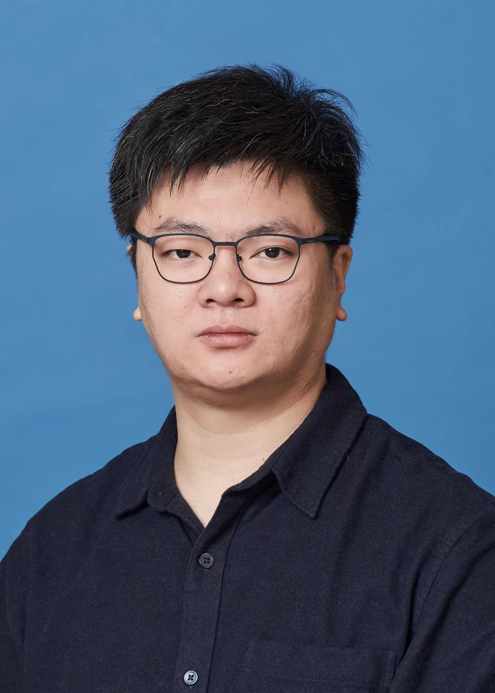
Han Teng
Chinese Academy of Sciences |
Introduction:
Researcher and doctoral supervisor at the Institute of Software, Chinese Academy of Sciences, supported by the CAS Talent Program. He received his bachelor's degree in Industrial Design from Xi'an Jiaotong University and his doctorate from the Human-Computer Interaction Laboratory at the University of Manitoba, Canada. His research focuses on natural human-computer interaction, tactile perception, and flexible tactile interfaces. He has published over 30 papers at top international conferences and journals on human-computer interaction, including ACM CHI, UIST, IMWUT/Ubicomp, and has been nominated twice for Best Paper. He has also published in high-profile SCI journals such as npj Flex, Elect, Nature Comm, and Adv. Intel Sys. He currently oversees and participates in national projects, including key and general projects of the National Natural Science Foundation of China, and leads numerous collaborative projects with companies.
Report Title: Content Framework and Teaching Suggestions for Haptic Interaction
Report Introduction:
Haptic interaction is a key component of multi-channel interaction and an integral part of the new manipulation-based interaction paradigm for the fusion of virtual and real spaces. For a long time, haptic interaction has been underestimated compared to visual interaction, and its teaching content has been unclear. In conjunction with the ten-part tactile interaction chapter, I will share the basic teaching content of tactile interaction, from the mechanisms of tactile perception to tactile device technology, as well as application scenarios of tactile interaction. Furthermore, I will discuss how to design a method that integrates teaching and practice in tactile interaction, a highly practical course, to stimulate students' interest in learning and hands-on practice. |
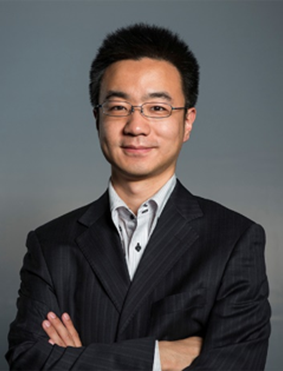
Mi Haipeng
Tsinghua University |
Introduction:
PhD, Professor. Selected for the National Young Talent Program in 2017, he also received the Tsinghua University "Academic Newcomer Award" that same year. He currently teaches in the Department of Information Art and Design at the Academy of Fine Arts, Tsinghua University, and is a visiting researcher at the Tsinghua University Future Lab. His research interests include interface design, robotics interaction, digital innovation of traditional crafts, and interactive art. With a dual background in science and technology and art, he is dedicated to exploring the intersection and convergence of science and art. He has published over 50 academic papers and served as peer reviewer for numerous international journals and major academic conferences, including CHI and UIST.
Report Title: Lesson Plan Organization and Teaching Practice in Robotic Interaction Design
Report Introduction:
Human-Robot Interaction (HRI) is a branch of human-computer interaction, focusing on various issues related to human-robot interaction, including cognition, perception, interaction technology, design, and user research. This report will combine lesson plan organization from relevant chapters in the book "Ten Lectures on Human-Robot Interaction" with teaching practices from the "Robot Interaction Design" course offered at Tsinghua University, aiming to provide a reference for teachers interested in related courses. |

Tong Xin
Hong Kong University of Science and Technology, Guangzhou |
Introduction:
Assistant Professor in the Computational Media and Arts Domain at the Hong Kong University of Science and Technology, Guangzhou. Her research focuses on the application of human-computer interaction technologies in health, healthcare, accessibility, and digital cultural heritage, including virtual/augmented reality, AI, generative AI, and large language models. He serves as a member of the CCF Human-Computer Interaction Committee. He has received the 2024-2026 Foreign Expert Talent Project, the 2025 CCF-Lenovo Blue Ocean Research Fund, the Guangzhou Provincial Science and Technology Department Science and Technology Plan Project, the Guangzhou City-University Joint Project, the ACM CHI 2024 Best Paper Award (top 1%), various scientific research projects funded by the Suzhou and Kunshan governments, the Si Nian Foundation, the Hou Tu Foundation, etc., the Kunshan Society for Science and Technology 2023-2024 Advanced Individual Award, the Canadian Natural Science and Engineering Foundation Postdoctoral Project, the Canadian MITACS Research Project, and other awards.
Report Title: Accessible Human-Computer Interaction Research and Teaching Practice
Report Introduction:
This lecture, centered on the theme of "Accessible Human-Computer Interaction Research and Teaching Practice," will focus on key topics related to how to incorporate accessibility and assistive technologies into teaching. These topics include theoretical models and definitions of accessibility, key accessibility groups and their characteristics, the design and evaluation of accessible technologies, and the core concepts and practical applications of universal design. Drawing on practical examples from human-computer interaction research, the lecture will analyze and introduce the specific steps and evaluation methods for accessible technology design, providing students with a learning path that integrates theory and practice. This lecture aims to provide HCI educators and students with effective teaching strategies and methodologies, inspiring research and innovation in the field of accessible HCI. |